Sunday, January 31, 2016

The Murder Of Internet Radio

January 31, 2016


The Live365 internet radio network that I've been linking to from here is closing as of January 31, 2016. That's because of the royalties that are imposed by the US govt agency that works with artists and producers. They have been changed as of Jan.1.
They smelled blood a few years ago when internet radio caught on, and pounced to bleed them. Administered by the usual government socialist types, I don't believe they had good judgement in setting the rates. They were not based on profit the stations made, but were blind flat rates.
There's very little money in internet radio. Start with the fact that every single listener needs to be allotted that amount of bandwidth. You can laugh when you hear that the more listeners you have, the more you lose money.
For a few years there was a plan where low-income broadcasters could pay just based on profit. People fought tooth and nail a few years ago just to get that concession. But ... there was an expiry date, and that is ended now.
Stations are falling as you read.

Monday, July 6, 2015

Converting DVDs - some pointers

(Updated May 11, 2016)

I haven't seen a single DVD ripping program in the world that can convert them correctly automatically.
There are some points about the way DVDs are encoded onto the disc recording space that need to be known.
The standard recording space is 720w x 480h pixels in the NTSC video system (North America). For PAL it's 720x576p. I'm dealing with NTSC. The first thing to realize is that it is NEVER coded in the correct shape on the disc. There is a formula, and the player knows how to interpret it and display in exactly the right way. You have never seen a DVD player make a mistake that way.
However when it comes to computers, there are plenty of mistakes. The world of ripped DVDs on the web is a disaster area.
Firstly, the individuals who write ripping programs don't know everything they need to know. Experts from the commercial DVD world would be needed to advise. I don't know all the formulas myself.

Aspect ratio means "SHAPE", the shape of the picture. AR 1.50 means width is 1.5 times the height. That happens to be the AR of 35mm film. That can also be written as 3:2.
Widescreen TVs are 16:9, or AR 1.77. Old square TVs are 4:3 or 1.33. Old non-wide movies were AR 1.37. Cinemascope was AR 2.35. The formally correct way to write that is 2.35:1. The most common widescreen movies are AR 1.85.
There are many variations in shape in the film and video world.

When coding onto a DVD, it either expands the width of narrow ARs, or squashes the width of wide movies. It also typically leaves black margins on either side which are not part of the picture.
So you need to know those margins in each DVD so you can crop them out. Then you need to know the correct AR for converting the remaining image area. The AR is coded into the DVD specs and rippers can find that easily. The locations of side margins is something NOBODY has mastered. So you end up needing a conversion program that lets you see the DVD image first, then manually tell it how to crop.
This is what rippers need to incorporate in programs. There is a format for giving the image area that looks like this example, for a 720x480 DVD:  8:0:704:480.  I need some expert to tell us where this is found in a DVD.
It means the left margin is 8p, width of image is 704p, leaving right margin of 8p. It is common to have 16p excess space on DVDs. The exact figures can vary a lot. The 2nd and 4th numbers mean height starts right at the top and goes all the way 480p.

Here are images of one movie recorded by someone from TV and made into a DVD. As displayed in VirtualDub the exact way it's coded onto the DVD, 720x480p NTSC. At about 1h50m the framing changes for the rest of the film, from one frame to the next.
This kind of change only happens occasionally.


Programs that let you view the image before conversion include VirtualDub and Fair Use Wizard. VD needs the mpeg2 plugin. For DVDs that are not protected, you open the DVD VIDEO folder and note the VOB sections that contain your target video. In VD use the open command with extended options, load the first VOB plus the others in the set. It will create one continuous video file. This will give you avi output with correct audio sync.

I'm calling on writers of ripping programs to learn the cropping specs and incorporate them. Then have an automatic feature where the user gives you a general instruction for size of output, and you rip it using the right cropping and AR. The user could tell you one of the dimensions like width.
It is eminently unreasonable to ask every user to give you the exact dimensions WxH. It's also unreasonable to ask ordinary people to know things like target bitrates.
I also say don't get messed up with requiring dimensions to be multiples of 16 or whatever, so that you produce the wrong shape like an illiterate SLOB. Or you could automatically pad borders with a margin if you insist.


What, you don't think this belongs in a Music Journal? Well just rip da soundtrack and shaddup.

Saturday, January 10, 2015

Teresa Brewer Coral singles Discography (1952-64)

updated Feb.24, 2015


Coral US singles in time order.
Billboard chart positions in brackets.


1952:
Sing Sing Sing / I Don't Care
Lovin' Machine / Noodlin' Rag
I Hear the Bluebells Ring / Kisses On Paper
Rhode Island Redhead / [Eileen Barton]
Gonna Get Along Without Ya Now (#25) / Roll Them Roly Boly Eyes
Til I Waltz Again With You (#1) / Hello Bluebird
1953:
Dancing With Someone (#17) / Breaking In The Blues
Into Each Life Some Rain Must Fall (#23) / Too Much Mustard
Ricochet (#2) / Too Young To Tango
Bell Bottom Blues (#17) / Our Heartbreaking Waltz (#23)
Baby, Baby, Baby (#12) / I Guess It Was You All The Time (solo)
I Saw Mommy Kissing Santa Claus / Ebeneezer Scrooge
Too Fat For The Chimney / I Just Can't Wait For Christmas
1954:
Jilted (#6) / Le Grand Tour de l'Amour
Skinnie Minnie (#22) / I Had Someone Else Before I Had You
Au Revoir / Danger Signs
Time / My Sweetie Went Away
Let Me Go Lover (#6) / The Moon Is On Fire
1955:
I Gotta Go Get My Baby (#19) / What More Is There To Say
Pledging My Love (#17) / How Important Can It Be
Tweedlee Dee / Rock Love  (nonhit)
Silver Dollar (#20) / I Don't Want To Be Lonely Tonight
The Banjo's Back In Town (#15) / How To Be Very Very Popular
Baby Be My Toy / So Doggone Lonely
Shoot It Again (#66) / You're Telling Our Secrets
1956:
A Good Man Is Hard To Find / It's Siesta Time
A Tear Fell (#5) / Bo Weevil (#17)
A Sweet Old-Fashioned Girl (#7) / Goodbye John
I Love Mickey (#87) / Keep Your Cotton-Pickin' Paddies Off My Baby
Mutual Admiration Society (#21) / Crazy With Love (#73)
1957:
How Lonely Can One Be / I'm Drowning My Sorrows
Empty Arms (#13) / The Ricky-Tick Song
Teardrops In My Heart (#64) / Lula Rock-a Hula
It's The Same Old Jazz / Born To Love
You Send Me (#8) / Would I Were
Hush-a-Bye, Wink-a-Bye / Listen My Children [Christmas]
1958:
Lost, A Little Puppy / Because Him Is A Baby [children's]
There's Nothing As Lonesome As Saturday Night / Whirlpool
Saturday Dance / I Think The World Of You
Pickle Up A Doodle (#99) / The Rain Falls On Everybody
The Hula Hoop Song (#38) / So Shy
The One Rose (#75) / Satellite
Jingle Bell Rock / I Like Christmas
1959:
Heavenly Lover (#40) / Fair Weather Sweetheart
Bye Bye Baby Goodbye / Chain Of Friendship
Mexicali Rose / If You Like-a Me
1960:
Peace Of Mind (#66) / Venetian Sunset
How Do You Know It's Love / If There Are Stars In My Eyes
Anymore (#31) / That Piano Man
Have You Ever Been Lonely / When Do You Love Me
1961:
Whip-poor-will / Older and Wiser
Milord (#74) / I've Got My Fingers Crossed
Little Miss Belong To No One / Seashell
Step Right Up / Pretty Looking Boy
1962:
Another / I Want You To Worry
You Came A Long Way From St. Louis / One Heart Less To Break
1964:
Cry Baby / I Hear the Angels Singing


Highlighted titles can be heard by clicking.

There were also duets, reissues, EPs (Extended Play singles).
The 65000 series was like oldies reissues, the Silver Star series.


Find more information at :
Teresa Brewer Center - teresafans.org
Facebook Fans of Teresa Brewer
Rateyourmusic.com
45cat.com


Monday, November 10, 2014

What does music "mastering" mean?


Updated July 31, 2015

If you buy reissue CDs of old music, or if you produce them, you see the marketing phrase "Digitally Remastered".
WRONG.
Ya don't know what mastering means.
So stop filling this society with illiteracy.


The people at Rhino Records explained it very well:
The core of the confusion comes from the base word itself, "master".  In music, a master is a tape that has been prepared to manufacture either a record, cassette, 8-track or CD. Over the past 50-odd years, however, the word "master" has been used to describe a number of different types of tape and as such has become a bit ubiquitous, particularly in advertising copy.
In the simplest scenario, mastering historically meant taking the original tape that was used to record a recording session and then
preparing it by applying various electronic processes (filtering, equalizing, echo, copying, etc.) to the tape. When the processing was completed - that is, when the producer thought he had gotten the best commercial sound possible - that processed copy or original became the "MASTERTAPE" or "master". This was then used to make the metal parts that eventually would "stamp out" 45 RPM (or 78 RPM) singles.

This processing was necessary in the early days, particularly when the record label was small and the recording studio and microphones primitive. The actual tape running during the session - which we refer to as the "SESSION TAPE" - was often out of balance with regard to volume levels, and had to be equalized and compressed to allow for correct cutting of the actual record grooves during manufacture and to compensate for faulty recording technique. It should be mentioned too that even 60 years ago, vocal performances were often brought from poor or mediocre to acceptable by way of electronic tinkering.

As overdubbing came into use in the 1960s, another stage was added to the mastering process. A "basic track" would be recorded first (usually the instrumentals); then, whatever was to be overdubbed (like the lead vocal or a special percussion instrument or sound effect) would be recorded and combined with that basic track tape to make a copy. That copy would
then be processed and become the MASTER TAPE.

When LPs began to flourish in the late '50s and early '60s, another stage was added to the mastering process. Eager to release album product, many labels sought to gather up a number of their previous single releases to form an LP. To do this, they would go back to the MASTER TAPE for the various singles, and copy
each one onto a (watch out!) "master compilation tape". This tape was then copied.. with processing to produce an "album master". Technological development meant more confusion in terminology. As cassettes and 8-track tapes became viable music carriers, special master tapes had to be prepared for each configuration. And what does a record company do in this case - they make another copy, a copy of an "album master" that is then re-sequenced for cassette or 8-track. These copies become "cassette masters' and "8-track masters". Masters, masters, masters.

The real dirty word in all of this is "copy". Every time a tape is copied, the resulting copy "loses" something from the original. It also gains distortion. ... If one company wanted to license a recording from another, they would not receive anything approaching the original SESSION tape; instead, they would receive yet another copy, a copy of a copy in effect. Considering the lack of importance attached to rock'n'roll in general by virtually all labels in the '50s and '60s, this practice of copying tapes ad nauseum coupled with a general sloppiness in tape archiving and the assumption that "one master is as good as another", had led us to the predicament we now find ourselves in when trying to produce quality reissues of this vintage material  ...

When we talk about sloppiness in the record industry, we can go on for days. In the early pre-LP days, labels would often throw out or record over the original SESSION TAPES and just keep the MASTER. Sometimes they would just cut the actual 'take" chosen for mastering from the SESSION TAPE and splice it onto another reel (which leads to another confusing use of terminology ... the "take" chosen as best from a recording session is often called the "master take" or...can you guess...the "master"). Often that small piece of tape would be moved and removed to different album masters as time went on, making their location today nearly impossible to find. Sometimes the basic track can be found, but the overdubs necessary to reproduce the actual record may be lost. ...

"Remastered from the original tapes" sounds wonderful, but it can be misleading. All of the stages mentioned above can be considered "original tapes", and a number of different tapes can be considered the "original masters".


CONCLUSIONS:

So for all you CD issuers, when you copy vinyl records to digital, ya ain't "remastering" nothin.
You are making a copy that is based on the original masters, which is okay in its own way.

As for really remastering from the session tapes, I am not pleased with that. It usually does not sound as good as the original hits masters. To think that you can do a better job than the original people?

There is also the term "remixing". I wonder how much it's being misused. If you are just editing a copy, you sure are not remixing.

Vinyl albums in the digital era:
They tend to be made from the digital masters. Old music is digitized from analog to make a CD. Then the doinks make the vinyl from the digital master instead of the analog. Vinyl buyers get no advantage over the CDs.
If you are wondering ... analog music has all the sound in it, but digital loses much of it. 16-bit (CD) music is limited.
The only hope is 32-bit floating point digital recording. That is not used commercially. 

Wednesday, August 28, 2013

Connie Francis - Behind the Fame

Updated July 29, 2016

Connie Franconero grew up in New Jersey, of Italian heritage.
In 1955 MGM gave Connie a contract for several singles. The first one was Freddy, which the MGM chief wanted as a gift for son Freddy's birthday. A pretty good song, but they say it was only played at the local park merry-go-round. The following singles had some good pop items, but not enough for hits. In 1957 Connie sang the voice of Tuesday Weld in the movie Rock Rock Rock  for two songs, which became one of the singles. Really lame songs.
After the 10th non-hit her father got serious and stepped in. He decided to choose the song Who's Sorry Now, which was a pop oldie. Finally she had a big hit and the rest is history.

From then on her father directed her recording career. In the earlier days they had been approached by mobsters, who said they could make her a star because they owned all the jukeboxes. Father turned it down. Now he seemed to have the golden touch in choosing records.
Connie became interested in a relationship with Bobby Darin then. Father didn't approve and that was stopped. I don't know but possibly Bobby had mob connections. There's a lot of that.
For her first movie Where the Boys Are in 1960 father approved only if there was nothing sexual for her. So Tuesday Weld did that stuff. Connie was not made up very attractive and was not presented as exciting. That improved in later films.

Now from 1958 to 1963 she was blessed by great pop-rock compositions by New York composers like Neil Sedaka and Howard Greenfield. A lot of sentimental love songs with great harmony and melody.
From 1963 the caliber of American songwriting started to wane and like everyone else she was having less success.
That year she had a hit with In The Summer Of His Years, which was a tribute to President John F. Kennedy after his assasination. Strangely, that song is completely ignored since then. I think it's politics. Jews who mostly control the media want to suppress him.
Some songs are overlooked because of the timing of her hits albums. I'm Gonna Be Warm This Winter came too late for her second hits album. However it did get included in the 15 Hits LP which covered her from the start. Other hits that came too late for the hits LPs were Blue Winter and Your Other Love.

Albums continued thru the 1960s along with some lesser hits.
As time went on she had problems with marriage, and in 1974 she was raped in her hotel in Long Island after performing.
In the late 60s she had plastic surgery to make her nose look less Italian and more American. She looked fine but it affected her vocal range negatively. Then a couple decades after that she had it again to somewhat revert her look, to where she is now.

Apparently she bought the copyrights to her recordings from MGM (or Polydor), which was having constant problems with repeated bankruptcies and ownership changes (also affecting the James Bond films). She does not tolerate unauthorized distribution, including posts on YouTube. If I could hear from her maybe I could present some samples here.

Connie still performs today. She was the best selling female artist in the world until Mariah Carey came.

Connie Francis on the Statler Brothers Show 1998:

You can also see her biography program starting at this link.                                              


Friday, July 26, 2013

The Hit Parade Hall Of Fame


July 26, 2013

With the Rock and Roll Hall Of Fame getting a lot of attention, 1950s Pop music wasn't getting enough. So John Rook decided to pay it tribute with a new Hall Of Fame organization. The first round of inductees was in 2007.
It has been selecting Pop artists from all decades since then. The first year told the tale of what it was all about.

Inductees of 2007 were
Pat Boone
Patti Page
Teresa Brewer
Bobby Darin
Bing Crosby
Perry Como
Nat King Cole
Jimmy Clanton
The Four Seasons
Connie Francis
Aretha Franklin
Ricky Nelson
Diana Ross
Roy Orbison
Paul Anka
The Beatles
Beach Boys
Tony Bennett
Dion
Doris Day
Fats Domino
Neil Diamond
Elvis Presley
Johnnie Ray
Neil Sedaka
Chubby Checker
Frank Sinatra
Johnny Cash
Ray Charles

John Harlan Rook was an American radio announcer and director going back to the 1960s.
Here are links:
The Hit Parade HoF site
The Wikipedia article                                        

This is an example of how the new wave of late 1960s hippie music displaced the former Pop and Rock and Roll music of the 1950s and early 1960s. Even Wikipedia refuses to have a separate article on the Hall, but buries it within the John Rook article. It took until 2007 to think of this, and it does not seem to be well known.
  
There is an element that disregards 1950s Pop. It favors jazz or punk or soul. It comes down to who controls the media the most.
When Dick Clark was alive he worked to feature the classic music. He also organized the annual Peoples' Choice music awards show, which was a reaction to the otherwise leftist control of the media which shoved soul and jazz down everyone's throats.
The radio music services don't have 1950s Pop channels.
Somehow 1940s Pop becomes categorized as jazz too.

Each year nominees are named early in the year, and you the public can vote until the results are counted about 11 months later.
So as The Democrats say, vote and vote often.


Tuesday, January 1, 2013

À La Carte - Euro Girl Group

 (updated January 6)


In 1978 two then little-known German producers - a married couple Tony Hendrik and Karin Hartmann, employed by Hansa International (sub-label of Ariola-Eurodisc), developed the project of a female pop group. These girl-groups were especially popular in Europe in the late 70s.  Among others those included Arabesque (Germany), Baccara (Spain), Maywood and Luv (both from the Netherlands).

The first single of A La Carte "When The Boys Come Home" (Ariola/Hansa 100 478-100) was released in March 1979. The song, performed by three attractive girls from London: Patsy Fuller, Julia and Elaine, gained popularity and the group was invited to the famous German TV-show "Musikladen" ("Music Shop"). The single had good sales, and in October a second catchy single was released "Doctor, Doctor (Help Me Please)" (Ariola/Hansa 101 080-100), with a new line-up: Patsy Fuller, Jeanny Renshaw, Denise Distelle. After that nobody dared to deny their reputation as the best dance girl-band. In 1980 one more replacement occurs: instead of Denise Distelle came Katie Humble. In March 1980 this line-up a launched new single - a cover of Manfred Mann's 60s super-hit "Do Wah Diddy Diddy" (Ariola/Hansa 101 677-100), in a short time followed by their first album - "Do Wah Diddy Diddy Round" (LP: Ariola/Hansa/Coconut 202 143-320).
The next single of A La Carte - "Ring Me, Honey" (Ariola/Hansa 102 429-100), was released in September 1980.
In January 1981, after a change of two members, Jeanny Renshaw, Linda Daniels and Joy Martin released the new single "You Get Me On The Run" (Ariola/Hansa/Coconut 102 871-100). The lead vocals in the song were of Jeanny and Joy. The third girl, Linda Daniels, was needed only for the "phantom" presence of the third singer, the recent Denise Distelle. Then were issued 3 singles and the next album called "Viva" (LP: Ariola/Hansa/Coconut). "In the Summer Sun Of Greece" was released on a single (Ariola/Hansa/Coconut 104 263-100) in April 1982 and its front cover shows one more change in the line-up: Kati Humble's comeback instead of the blue-eyed blonde Linda Daniels. This line-up existed until the group's splitting.

In July 1982 they released the single "Aha Tamoure" (Ariola/Hansa/Coconut 104 569-100) and the group's activity was summed up on the first compilation - "The Wonderful Hits Of A La Carte" (LP: Ariola/Hansa/Coconut 204 935-302). This album included nearly all the hits of A La Carte: "When The Boys Come Home", "In The Summer Sun Of Greece", "Do Wah Diddy Diddy", "Aha Tamoure", "Viva Torero" and others.
In January 1983 was released the single called "Radio" (Ariola/Hansa/Coconut 104 918-100). The two new songs were never issued on any LPs.
The next album of the group "Rockin' Oldies" (Ariola/Hansa/Coconut 205 743-320) and new single "On The Top Old Smokie" (Ariola/Hansa/Coconut 105 802-100) were released at the same time in September 1983. In 1984, the group launched the next single "Jimme Gimme Reggae" (Ariola/Hansa/Coconut). The title song was a new version of the one from the first album, and a completely new song - "Lightyears Away From Home" was on the back side.
After that, A La Carte disappeared from the scene. Probably, it was the result of the birth of the new "lovely child" of their producers, Karin Hartmann and Tony Hendrik, the male trio Bad Boys Blue, launched in 1984 with "L.O.V.E. In My Car ". But maybe also because of decreasing demand in the music market for female acts and a corresponding increase for male ones. The attractive girl-groups were getting competition from male duos and trios like Modern Talking, Joy, London Boys, Silent Circle, Pet Shop Boys...


[This article is based on a defunct old GeoCities website in order to keep the information alive. The credits given were:
Original Russian text by Alex (Invisible Man), with assistance of Marc Wiese.
2004-2005 English translation by L.D.]

Link:
The World Of A La Carte
               
LINK:

Tuesday, May 22, 2012

BOBBY CURTOLA singles discography

(Updated June 23, 2017)


Canadian 1960s singles, produced by Basil and Dyer Hurdon.
Tartan label
1001 Hand In Hand With You with the Don Trio                       1960
         / Johnny Take Your Time - by the Don Trio alone
1002 My Love / Ever Near You
1003 You Must Belong To Me / Deeper and Deeper                1961
1004 Call Me Baby / It Started When You Stopped To Say Hello   + the Dons
1005 Don't You Sweetheart Me / My Heart's Tongue-tied   w Anita Kerr Singers
1006 I'll Never Be Alone Again / Hi-Tone   w Anita Kerr Singers
1007 Hitchhiker / My Love (rerecording)
1008 Fortune Teller / Johnny Take Your Time (rerecording)
1009 You Must Belong To Me (rerecording) / Nothing's the Same
               As Before                                                               1962
1010 I Cry and Cry / Big Time Spender
1011 Aladdin / I Don't Want To Go On Without You
1012 My Christmas Tree / Jingle Bells
1013 Destination Love / Don't Stop Dreaming Of Me             1963
1014 Gypsy Heart / I'm Sorry
1015 Indian Giver / Hand In Hand (rerecording)
1016 Three Rows Over / Dream Wishes
1018 Move Over / They Say
1019 Little Girl Blue / How'm I Gonna Tell You                      1964
1021 You're Not a Goody Goody / Far Away Heart
1022 As Long As I'm Sure Of You / I'd Do Anything For You
1024 Come Home Little Girl / Many Moons Ago
1025 Alone and Lonely / You'll Be Falling In Love                  1965
1026 It's About Time / Paper Heart
1027 Mean Woman Blues / Devil May Care Angel
1028 Walking With My Angel / Midnight
1029 Making Love / Donna
1030 Forget Her / If All Goes Well
1031 While I'm Away / Not Til Now                                      1966
1032 The Real Thing / Suddenly You Came Along
1033 Wildwood Days / Without Your Love
1034 It's Not Funny Honey / Tattletale Heart
1035 Devil Lips (Kisses Of Fire) / Give Me a Reason
                        To Stay                                                          1967
1036 Quando Quando / If All Goes Well
1040 Footsteps / What Can I Do
1041 Sandy / Indian Love Call
1043 Pretty Blue Eyes / Taking A Picture                            1968
1044 Can't Help Falling In Love / Step By Step
1045 (unreleased?) Unless You Care / Taking A Picture
1045 Mammy Blues / Free To Carry On                              ? 1971
1046 Gotta Give Love / My Christmas Tree

Tarton 54039 Have You Ever Really Been There / Lady With the Rose   ?


With 1005 they started recording in Nashville, with Bill Justis arranging.

Highlighted titles are linked to online samples.
Omitted numbers are mainly by other artists.
I'm not sure about 1045a. 54039 was on a later resurrection of the Tartan label.
See 45cat.com for more of his releases.

One song that's missing here is Mark My Word. Possibly that was 1020.

Songs I'd like to hear at the moment include: Step By Step, Unless You Care, and the first recordings of  My Love, You Must Belong To Me.

Check out this video at YouTube of Gypsy Heart [link]. The dancing is synchronized with the song.


Basil Hurdon and Dyer Hurdon - songwriters and managers at Tartan Records of Canada:


Canadian charts. Click to enlarge or download.

Friday, December 11, 2009

Teresa Brewer - early recordings


(updated June 4, 2019)

How her recording career started.
Her birth name was Theresa Veronica Breuer. Her father was from Germany and her mother was from the Hungary-Romania area with ancestry in White Russia (Belarus). They lived in Toledo, Ohio, USA. Birth date May 7, 1931 (a girl:).
She quit school at the age of 16 in early 1948, and zipped off to New York for professional singing engagements, accompanied by her aunt. She was a hit in clubs as in the Latin Quarter. Soon an agent offered his service.
At age 18 she was married, to Bill Monahan.
In 1949 London Records, based in England, noticed and signed her.
It took two unsuccessful singles before she hit with Music Music Music. 1949 into 1950 it became a #1 international million seller, while she was 18.
Her permanent residence was just north of New York City, and she worked out of New York.

The singles I know of on London, with Billboard US chart positions and 78 numbers, were:
1949- When the Train Came In / A Man Wrote a Song (511)
- (duets with Bobby Wayne) Copper Canyon / Way Back Home (562)
- I Beeped When I Shoulda Bopped / Old Man Mose (563)
1950- Music M.M. (#1) / Copenhagen (604)
- Choo'n Gum (#17) / Honky Tonkin' (678)
- Punky Punkin' / Cincinnatti Dancing Pig (768)
- Molasses Molasses / Grizzly Bear (794)
- You've Got Me Crying Again / He Can Come Back Any Time He Wants To .... (795)
1951- The Thing (#20) / I Guess I'll Have To Dream The Rest  (873)
- If You Want Some Lovin' / I've Got the Craziest Feeling (967)
- Lonesome Gal / Counterfeit Kisses (970)
- Oceana Roll / The Wang Wang Blues (1083)
- If You Don't Marry Me / I Wish I Wuz (1085)
- Longing For You (#23) / Jazz Me Blues (1086)


Coral early singles:
1951- 1. Sing Sing Sing / I Don't Care
1952- 2. Lovin' Machine / Noodlin' Rag
- 3. Gonna Get Along Without Ya Now (#25) / Roll Them Roly Boly Eyes
- Til I Waltz Again With You (#1)
1953 - Dancing With Someone (Longing For You) (#17)
- Baby Baby Baby (#12) / I Guess It Was You All The Time (solo version) _ _ (from her movie Those Redheads From Seattle)
- a reissue single #65520 of Music Music Music (Coral rerecording) / Gonna Get Along wo Ya Now

Highlighted song titles are linked to online samples.
There were other singles where she sang in duets and groups.


Musical film shorts


In 1951 Teresa filmed eight musical short films. Two were with the Firehouse Five Plus Two band - Music Music Music and Old Man Mose. Then there were Snader Telescriptions. These involved many artists and were used as television filler. She was backed by Jack Pleis and the Dixieland All-Stars on Music Music Music, Copenhagen, I'm The Lonesomest Gal In Town, If You Want Some Lovin', Honky-Tonkin', and I've Got The Craziest Feeling. She was still on the London label at the time, aged 19.

------ ------

The backing group in the Craziest Feeling film is the Dixieland All-Stars with Jack Pleis on piano, an arranger for record labels.


Movie
Teresa Brewer publicity photo
for Those Redheads From Seattle
                                       
 In her one movie role she played a showgirl in Those Redheads From Seattle in 1953.


 Music! Music! Music! - alternate masters:

It seems the hit of Music was processed and mastered at the time to change the sound.
In 1976 London Records reissued 12 songs on the "World Of Teresa Brewer" LP. It has a London recording of Music that's about 20 seconds shorter with a different tone. Maybe they wanted to lower the pitch of the voice by slowing it down. I don't think they had tape at the time, so I don't know the method. The original master was apparently preserved by London and reissued here. Did they realize which edit they were reissuing? In other words the hit issue was slower and longer than what Teresa recorded. Or conversely, did Teresa want to speed up the song in the reissue?

Music! Music! Music! - master from World LP


Child performer

Teresa first performed on a local radio show at age two,
singing Take Me Out To the Ball Game. At age 5 she became a regular performer in a travelling Major Bowes vaudeville show, and she toured with it around North America til 12. She also made a few appearances on Bowes' weekly radio show in New York. From age twelve she was a regular on the local Toledo radio show Pic and Pat. So she was no novice when she hit New York at age 16.
Press here to hear her singing on Major Bowes radio: Darktown Strutters' Ball. This is found on the DVD The Original Amateur Hour hosted by Pat Boone.


Teresa's high school Yearbook entry 1947-48


Publicity photo in New York probably 1948.


Performing on an early television show.


Teresa's home after marriage, in New Rochelle north of New York city.


Teresa in the mid-50s in a rare cheesecake pose (sometime before hair permanents).


Please comment if you have further knowledge.

References:
her fan site is at teresafans.org
Facebook Fans of Teresa Brewer

Friday, February 27, 2009

Elvis Presley - The Rise and Decline and Comeback

(updated November 21, 2009)

In his hit period with RCA I see three phases. First before and during the army. Second from his army return to 1968. Third from his 1969 comeback til his supposed death in 1977.
What I call the decline started after 1965 and lasted til his comeback Christmas TV special in December 1968.
So there are two ways of looking at this - one by his 3 periods, and secondly by the ups and downs.

His first period 1956 - 1959 was the raucous rockabilly, using his instrumental trio as backup. When he was drafted in 1958 RCA picked as many songs as they could for him to record and release while away. These were not the best songs, but kept him afloat, and were collected on his second Golden Hits LP. They ran out of these hit singles by summer 1959 and he was not on the charts until his return in April 1960.

The second phase 1960 -1968.
In Europe he learned some classic European songs like O Sole Mio, and probably matured. On his return he asked the songwriters to adapt some of these for him. So O Sole Mio became It's Now Or Never, Torne a Sorrento became Surrender. Wooden Heart was from a German song.
No time was wasted when he returned. A couple of the songs debuted on the Top 40 immediately at #1. A couple others took a whole two weeks to reach #1.
Well the power of 1960 didn't quite continue in full force. I'd say he continued to have great original hits til the end of 1962 with "She's Not You". But even by 1961 they dropped to the level of "Feel So Bad", and people could sense this.
They were now using fuller arrangements at the Nashville scene. I suspect Boots Randolph was adding those great sax bits in the background, and maybe Floyd Cramer was in piano. These were his greatest productions, based on songs of the greatest writers like Doc Pomus and Mort Shuman.
There were four great regular albums (non-movie) between 1960 and 1965 - Elvis Is Back, Something For Everybody, Potluck, and Elvis For Everyone.
By 1963 his singles started to lack that great originality, tho they were still fine - Return To Sender, One Broken Heart For Sale, Bossa Nova Baby ...
Now they fell back on recycling some previously recorded album songs like Such An Easy Question (from Potluck).
By now his last #1 was Good Luck Charm in 1962. In 1963 he had some top 10s, in 1964 no top tens. In 1965 came his last top 10 until 1969 - Crying In the Chapel at #3 (Billboard). There would be no more #1s until Suspicious Minds in 1969.
In an interview around 1970 Elvis said there was a problem finding great new rock&roll songs by then. RCA started wasting our time with singles like Puppet On a String, Love Letters, and Indescribably Blue. So 1966 - 1968 was the decline. They tried some rockers which were not good enough: Big Boss Man, US Male, Long-Legged Girl, Guitar Man, A Little Less Conversation. They hardly made the Top 40.
But there were also some gems in that period: You'll Be Mine, Judy, Come What May, Tell Me Why ... which deserve attention.

The Comeback Special
So in 1968 Colonel Parker arranged a TV special. Instead of a Christmas theme, Elvis succeeded in making it a general rock&roll theme. He harked back to his early days, rocked in black leather, and had his original trio back.
The following singles were then geared to a new style, fitting the hippie era. There were the liberal themes decrying Negro poverty. Songs like In the Getto and Don't Cry Daddy probably caused the Detroit black riots, because they stirred up the feelings of guilt or bitterness. The music was not the same as the earlier era either.
I call this his third phase, and I relate it to the Second era of rock&roll. The first era was late 50s/early 60s. The second era being late 60s/early 70s. You know how it goes. Second era people don't recognize any music before the Beatles. Oldies start with the Beatles and Supremes, nothing earlier even exists.
So Elvis continued in this vein til 1977.
By the way I don't believe he died at that time. But it sounds like he died maybe a couple years ago. There was talk of Priscilla being left out of the inheritance.

Monday, January 12, 2009

Record-Rama Archives

(updated March 1, 2015)

Record-Rama had been a record store in Pittsburg USA for a few decades. The proprietor Paul Mawhinney has collected the largest vinyl record archive in the world. Now the store is closed and he is trying to sell that archive.
He wants to sell it as a whole collection and wants it preserved that way. His minimum price is $3 million. I say it's worth it. 1.5 million 45s dating from 1948, and a million LPs. This is not store stock, but saved copies of every record he ever dealt with. His aim was to have every single by every artist, and he published his list in his MusicMaster catalog. It probably contains every release by any favorite artist you can think of.
I think the best use would be to make the records accessible to reissue companies and to broadcasters so that anything could be made available to listeners.
He is at the same time clearing out what remains of his store stock. That is arranged thru his website and is a big-time proposition involving a minimum $5,000 purchase.
His store was a mecca for collectors of obscure rare vinyl, and I hope this music will be preserved.


A video on this can be seen at the Vimeo site:
The Archive from Sean Dunne on Vimeo.

The first edition of the MusicMaster catalog in 1982 came in two volumes, one by title and one by artist. It illustrates what he had in the archive at that time. Click to view larger.


Mawhinney's website is recordrama.com.

Sale of the collection
The collection has been sold to a Brazilian buyer named Zero Freitas as of December 2012, who plans a museum. This has been announced by The New York Times, CNN Money, and others.

Monday, October 1, 2007

The Great Clyde McPhatter


(Updated January 20, 2019)
Clyde's biggest pop hits were Lover's Question and Lover Please. He started as a lead singer in The Dominoes in the early 1950s, and then had his own Drifters group in 1954-55 on the Atlantic label. That made him huge. In 1955 after an army stint he went solo and stayed that way up to the 1970s, when he died in 1972.
My interest is his solo work. He was on Atlantic in the late 50s, MGM in 59-60, Mercury 1960-65, and smaller labels after that when his success faded.
His music had a glorious joy to it, and infectious melody and beat. A high tenor, he influenced many other such negro singers like Jackie Wilson and Dee Clark.
There are some good reissue CDs now which I can recommend. For Atlantic, "Deep Sea Ball". For MGM and Mercury there is "Rockin' and Boppin'" on the Ring Of Stars label, available at Continental Records (gocontinental.com). At his wikipedia article there is an extensive list of his hits and singles.

Here is a 1962 single picture cover. It was sold recently by Times Square Records of New York and included the news clip of Clyde's death in 1972. Click the image to see it larger.


You won't find all his good stuff by any means, so here are some highlights which may be rare. Press a title to listen.

Atlantic label:
Thirty Days - 1956 - his fourth solo single, a rocker.
Come What May - 1958 - what a joyful rendition. Recorded by Elvis in 1965.
Lovey Dovey - 1959 - the Clovers song, in a definitive uptempo style, later copied by Buddy Knox.
Deep Sea Ball - 1960 - a nonhit single after he had left Atlantic. In fact recorded in 1958 obviously inspired by Rockin Robin, written by Winfield Scott.

MGM:
Think Me A Kiss - 1960 - medium hit
Whisper Softly
The Glory Of Love
This Is Not Goodbye

Mercury:
Ta Ta (Just Like a Baby) - 1960 hit. Not remembered as much, maybe because the title TaTa means little, so I add the brackets to remind of the words. Written by Clyde and not intended as the hit side, it's a winner.
I'll Love You Til the Cows Come Home -1961 nonhit. A neat R&B composition. Flip of "Tomorrow Is a-Comin", which I think was meant as the A-side.
I Never Knew - 1961 #17 R&B, #56 Pop.
Happiness - The type of song that to me defines Clyde. Flip of "I Never Knew".
Deep In the Heart Of Harlem - 1964 moderate hit.
Happy Good Times - Flip of the Harlem single.
Three Rooms With Running Water - I think the second best song on his "Songs Of the Big City" album of 1964. It would have been a good choice for a single.
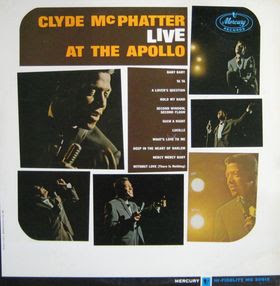
Baby Baby - 1964 single, from his album Live At The Apollo. This mono sounds better than the album stereo, where his voice in the middle is overpowered by the instruments on both sides. A rare nonhit single, his second-last on Mercury.


CLYDE SOUNDALIKES

The second incarnation of The Drifters, 1955-59 without Clyde, often tried to use soundalike singers to recapture the McPhatter sound. There was David Baughan in 1954-55. There was Bobby Hendricks in 1958, singing on Drip Drop. In 1959 on the hit "(If You Cry) True Love True Love", everyone must have thought that lead Johnny Lee Williams was Clyde. If you can point out others make a comment. There were also separate individual singers. Listen to the comparisons:

Honey Bee - Drifters with David Baughan. Recorded ~1954 but released in 1961 on the back of Some Kind Of Wonderful.
(If You Cry) True Love True Love - Drifters with Johnny Lee Williams
Drip Drop - Drifters with Bobby Hendricks. #58 pop, uncharted R&B.
Itchy Twitchy Feeling - Bobby Hendricks 1958 solo hit after parting with The Drifters
Just Keep It Up - 1959 solo hit by Dee Clark


Brook Benton's influence
Brook wrote Lover's Question. When Clyde started with Mercury he recorded some more of Brook's compositions. Here are a couple of obscure originals by Brook that you can compare with Clyde's. I have no evidence that Brook released these, maybe he sang them as demonstration discs. Will it surprise you to hear Brook singing Lover's Question?

Lover's Question by Brook
You're For Me by Brook
You're For Me - Clyde's recording as an unsuccessful followup to Ta Ta. The flip was also written by Brook - I Just Want To Love You.

Clyde Otis was usually Brook's co-writer.
Jimmy Oliver had been the guitarist for The Drifters and Clyde for a few years. In 1960 he and Clyde collaborated writing Ta Ta and some other songs for that album.
Belford Hendricks was the arranger for many of these Mercury R&B records including Benton's. He was so good at arranging those strings, and adjusting them for an R&B sound. Check the sliding strings sound in Brook's Kiddio. In fact I've decided to give it to ya rat now, because it cries out for illustration. Blacks went crazy for it in mid-1960. It was US Billboard pop #7, and R&B #1 for nine weeks. Written by Benton and Otis. Check out the duet hits by Brook and Dinah Washington as other excellent examples - Baby You've Got What It Takes, and Rockin Good Way. There, that saves me from writing a separate article.

Kiddio by Brook Benton


ALBUMS


This Atlantic Hits LP was released in 1963 after his Lover Please success. One side is his Drifters songs, the other solo.


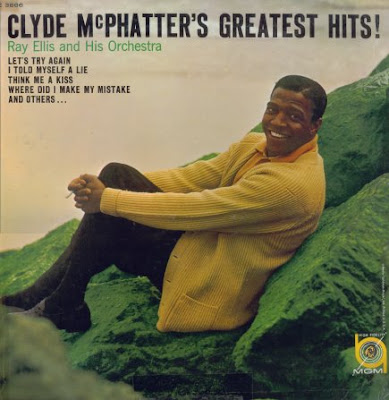
MGM tried to cash in with a "Greatest Hits" LP too, all their own recordings. I've only ever come across this one copy.
His first album on MGM in 1959 was "Let's Start Over Again", containing only ballads and no hits. (click an image to see it larger)
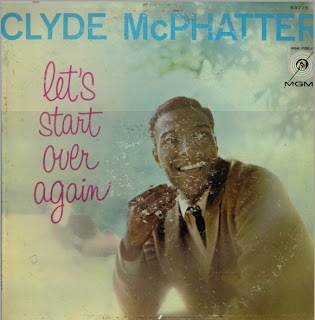


You'll never find it and it won't be reissued, so here's a link to the complete ALBUM.


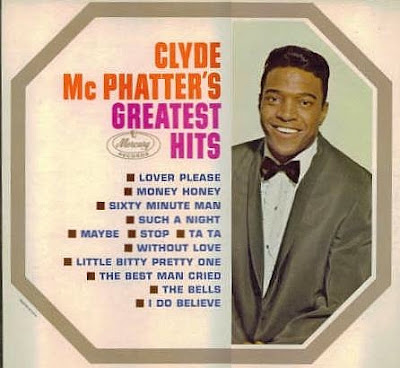
The 1963 Mercury Greatest Hits LP contained only Mercury recordings, but some were rerecordings of his 50s hits. Not all of these were hits of course.

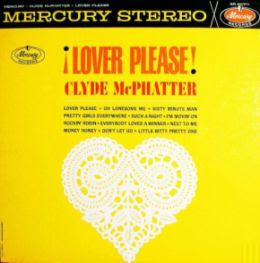
Following a Ta Ta album in 1960, Mercury released an album a year including Lover Please in 1962. Golden Blues Hits (1961) was full of GREAT renditions of other hits. The little known Rhythm and Soul LP of 1963 included some unsuccessful singles at the time, and had a harder edge.
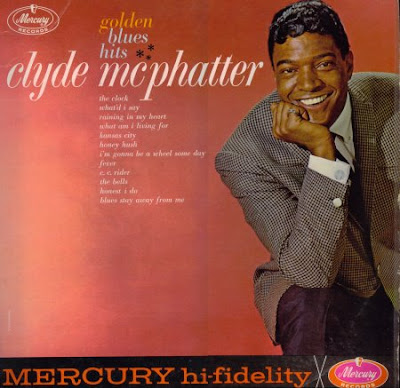


Samples:
Raining In My Heart
Honest I Do

Here's a link to the complete Golden Blues album.


Sample:
Hey Love

Link to the complete ALBUM


Lover Please LP . . . . . Live At The Apollo


Songs Of The Big City - 1964
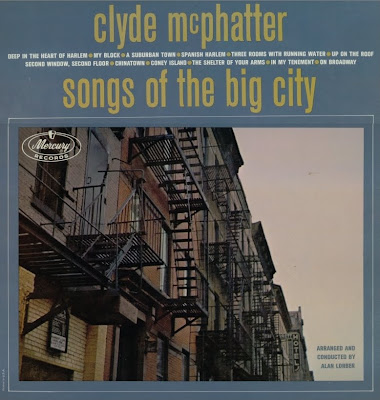
Here's a link to sample the ENTIRE ALBUM.


May I Sing For You was a 1962 Wing label LP mostly ballads.
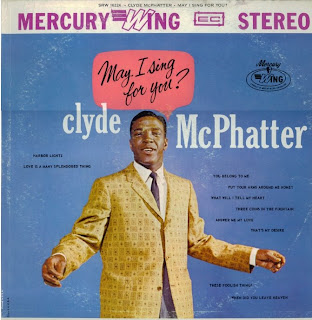


Link to complete ALBUM


After Mercury he recorded a couple years on the Amy label, and that is on a CD titled "A Shot of Rhythm and Blues". Then he spent three years living in England, creating a following in the "northern soul" scene, which was the northeast section of England.
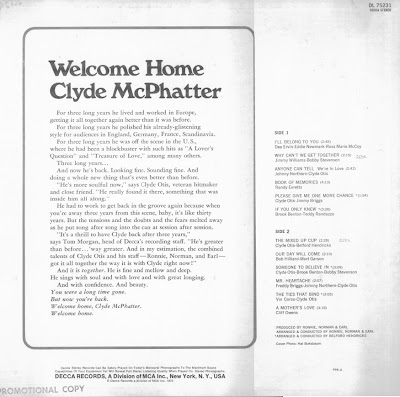
Returning to the US, Decca records produced an album titled "Welcome Home" and two singles, which were not successful. You may never find that so here is some material.

Samples of the singles:
I'll Belong To You
Why Can't We Get Together
Here's a link to hear the other 10 songs of the COMPLETE ALBUM.

To see an image larger click on it.

Clyde's son
Clyde had a son with Ruth Brown out of wedlock ("Ron McPhatter"). He is now known and performing himself as Ronn David. His website is at myheartentertainment.com. Check his YouTube channel.

Wednesday, September 12, 2007

Al Caiola and his Big Guitar

(Updated April 17, 2014)

Al Caiola is the pop guitarist who made hits of The Magnificent Seven and Bonanza themes in 1961. He had large orchestral backing from the United Artists label, and he adopted the style of Duane Eddy at the time - a twangy bass lead guitar sound. He was with UA thruout the 60s, releasing loads of records besides his hits. There was an import CD available from Australia at amazon titled "Bonanza - 1960-1969", which I can recommend.
It's another one of those situations where you'll never find all his good stuff reissued. Here is a complete list of his UA singles for the record. Highlighted titles have audio samples.


The Magnificent Seven / The Lonely Rebel _ _ _ 1960
Bonanza / Bounty Hunter - - - - - - - - - - - - - - - -- 1961
Autumn In Cheyenne / Speak Low
Rollerama / Stampede - - - - - - - - - - - - - - - - - - - 1962
Experiment In Terror / Sergeants 3 March
Katusha / Love Is Like Champagne
Guitar Boogie / Kalinka - - - - - - - - - - - - - - - - - - - 1963
Mexicali Rose
Gunsmoke / Ciao
Guns Of Navarone / James Bond Theme
Women Of The World (La Donna Nel Mondo) - - - - - - -
- - - - -/ Redigo
Burke's Law Theme / Smoke Signal
From Russia With Love / Mexican Summer - - - - - 1964
The World Of the Brothers Grimm .........................
....../ Baby Elephant Walk
On the Trail / Wheels West
Tuff Guitar / Hound Dog
Bash Brannigan / Hunky Funky ...........................1965
Ring Of Fire / Gabrielle
Glory Guys / Forget Domani
The Trials Of O'Brien / Walking Down the Line
Batman Theme / Karelia ......................................1966
Duel At Diablo / Sugar Me Sweet
Hill Country Theme .............................................
...../ Stay Awhile (Quedato Un Rato Mas0
Return Of the Seven / Rat Patrol
Eight On the Lam / Sailor From Gibraltar ...............1967
Tiny Bubbles / Stag Or Drag
Never Pick Up a Stranger / Sleepwalk
Bossa Nova Noel / Holiday On Skiis .............................
.......(with Riz Ortolani)
Here Is Where I Belong / Sound Of Music ..............1968
Scalphunters Theme / Theme For November
High Chaparral / Master Jack .................................1969
Infinity Blue / Soul American
Stiletto / Guitar Woman .........................................1969


There are some singles here that I'd still like to add to my collection.


Samples: Jezebel, Two Guitars, Big Guitar


Samples: Tall Man, Gunslinger, The Deputy


See his wikipedia article for a list of his albums.

Wednesday, September 5, 2007

The Diamonds - rare recordings

(Updated Oct.19, 2020)

You know The Diamonds from their 1957 hit "Little Darlin'". There are a couple of CD compilations now which present a lot more. Many of their releases of course weren't hits, and won't be found in collections. For the record here is a list..

Complete singles discography:

Black Denim Trousers and Motorcycle Boots _ _ _ _ _ _ _ _ _ _ _ _ _ _ _/ Nip Sip (Coral) 1955
Smooch Me / Be My Lovin Baby (Coral)
Why Do Fools Fall In Love / You Baby You .. (Mercury...) 1956
Church Bells May Ring / Little Girl Of Mine
Love Love Love / Every Night About This Time
Soft Summer Breeze / Ka-Ding-Dong
A Thousand Miles Away / Every Minute Of the Day
Little Darlin / Faithful and True ...................................1957
Words Of Love / Don't Say Goodbye
Zip Zip / Oh How I Wish
Passion Flower .. (dj only) Merc #71194 .....1957
Silhouettes / Daddy Cool
The Stroll / Land Of Beauty
Straight Skirts / Patsy (uncertain)
High Sign / Don't Let Me Down (Chic-lets) ................1958
Kathy-O / The Happy Years
Walking Along / Eternal Lovers
She Say / From the Bottom Of My Heart ....................1959
Gretchen / A Mother's Love
Sneaky Alligator / Holding Your Hand
Young In Years / The Twenty-Second Day
Batman Wolfman Frankenstein or Dracula / Walkin' the Stroll
Real True Love / Tell the Truth ..................................1960
Slave Girl / The Pencil Song
The Crumble / You'd Be Mine
You Short-Changed Me / I Sho' Lawd Will (Merc 71782) ..1961
The Munch / Woomai-Ling
One Summer Night / It's a Doggone Shame
The Horizontal Lieutenant / The Vanishing American ...1962

Highlighted titles can be heard by pressing. It's probably your only chance to hear them.


ALBUMS


Their greatest album was this 1959 Wing label compilation of 12 of their best rock&roll singles. Not fully a greatest hits album, it was very enjoyable, and features my favorite picture of them.


The Diamonds' western album


A very rare 1959 album you probably never even heard of. Twelve traditional western songs in standard arrangements with Pete Rugolo's orchestra. I found it at California Albums.
Here's a link to the complete album. Otherwise it will never be available, regardless of quality


Their first album

In 1957 following their smash Little Darlin', this album contained all original songs without any hits. The song Zip Zip was then released as a single hit.


Here is a link to the other 11 songs of the complete ALBUM.


The Diamonds Meet Pete Rugolo
album can be sampled HERE.


" The Diamonds 1970s " album


This is sometimes seen in their discographies. It was in 1971. Lead Dave Somerville was no longer there, but original member Mike Douglas was leading it. Under Douglas they were moving into the Blood Sweat And Tears style. Click any picture to see it larger.


Sample the entire album.


 References:

The Diamonds CD that I would recommend is "The Diamonds Collection" on the Stardust label.

The official website for the original group:
http://www.min7th.com/diamonds/

A new authorized website at www.thediamondsmusic.com is no longer available as of 2020.